The 10,000 Steps Myth: Do You Really Need to Walk That Much Every Day?
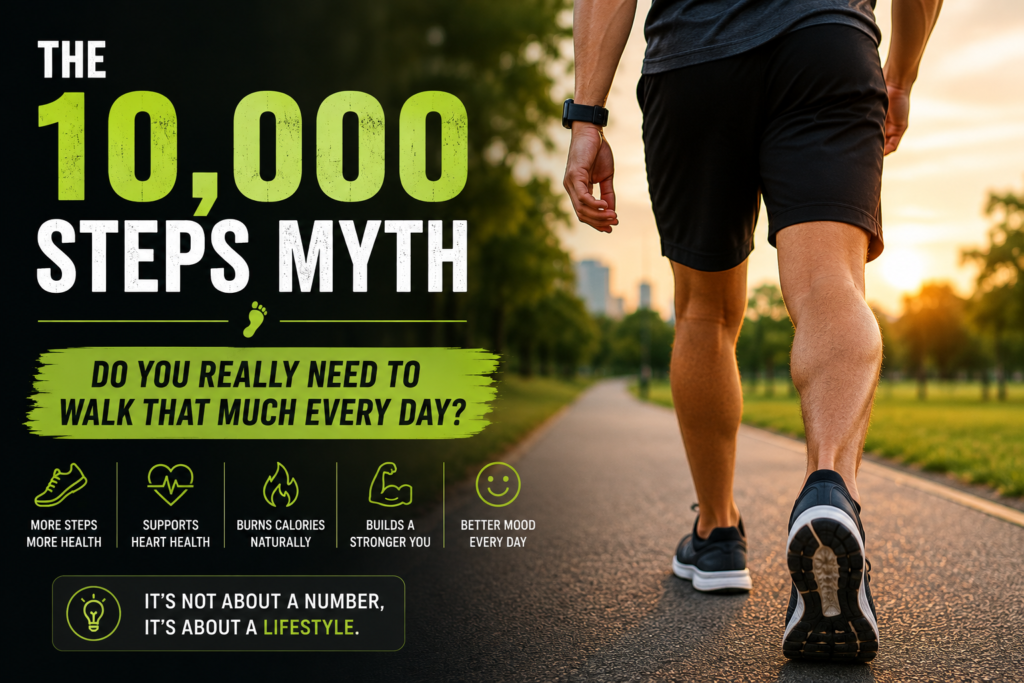
For years, 10,000 steps a day has been treated as the ultimate fitness target.
Your smartwatch reminds you. Your fitness app tracks it. And by the end of the day, many people find themselves walking around the house just to hit that magical number.
But here’s the question:
Do you actually need 10,000 steps every day to be healthy?
The answer is more interesting than you might think.
In 2026, fitness is moving away from arbitrary targets and towards a more personalised approach. Instead of obsessing over one number, people are starting to focus on something more important:
Moving more consistently.
Where Did the 10,000 Steps Goal Come From?
The 10,000-step target was not originally created as a scientifically proven rule for perfect health.
It became popular through the marketing of early pedometers and eventually turned into a global fitness benchmark.
Over time, 10,000 steps became the number many people believed they needed to reach every single day.
But your body does not suddenly stop benefiting from movement if you only reach 7,000 or 8,000 steps.
Movement is not all or nothing.
More Steps Are Good — But 10,000 Is Not a Magic Number
Walking is one of the simplest forms of physical activity.
It requires minimal equipment, can be adapted to different fitness levels and can easily fit into everyday life.
Regular walking can support:
- Cardiovascular fitness
- Daily calorie expenditure
- Improved endurance
- Better mobility
- Stress management
- General health and wellbeing
The important factor is not necessarily hitting one exact number.
It is about avoiding long periods of inactivity and building regular movement into your lifestyle.
Why Step Goals Can Sometimes Become Counterproductive
Fitness trackers are useful tools, but numbers can sometimes become stressful.
Imagine this:
You complete a great strength workout, spend time stretching and stay active throughout the day.
But your watch says:
7,842 steps.
Suddenly, you feel like you failed.
You didn’t.
Fitness cannot always be measured by one number on a screen.
Your total activity, training, recovery, sleep and nutrition all contribute to your overall health and fitness.
Steps are useful data—but they are only one piece of the picture.
Your Goal Should Depend on Your Starting Point
If you currently average 2,000 steps per day, immediately forcing yourself to reach 10,000 can feel overwhelming.
A smarter strategy is gradual progression.
Week 1
Aim for 3,000–4,000 steps per day.
Week 2
Increase your average by around 1,000 steps.
Week 3
Continue increasing based on your schedule and comfort level.
Over time, these small increases can create a significant improvement in your daily activity.
The goal is not to transform your lifestyle overnight.
The goal is to create a routine you can maintain.
Walking Is Not a Replacement for Strength Training
This is another important point.
Walking is excellent for general movement and cardiovascular health, but it does not provide everything your body needs.
A balanced fitness routine may also include:
- Strength training
- Mobility and flexibility work
- Cardiovascular exercise
- Recovery
- Proper nutrition
Strength training helps develop muscle, strength and physical resilience.
Walking can support your overall activity level.
Together, they can form part of a sustainable fitness lifestyle.
Simple Ways to Increase Your Daily Movement
You do not need to spend hours walking on a treadmill.
Small changes can make a difference.
Try:
- Taking a short walk after meals
- Using the stairs when possible
- Walking during phone calls
- Parking slightly farther away
- Taking short movement breaks while working
- Going for an evening walk
- Walking to nearby destinations
These small habits can add up over time.
The Bigger Goal: Build an Active Lifestyle
The 10,000-step trend has helped many people become more aware of their daily movement.
That is a good thing.
But the number itself should not become a source of pressure.
Whether you walk 5,000, 7,000 or 10,000 steps, the most important question is:
Are you moving more than you used to?
Progress is personal.
Your fitness journey should be based on your current lifestyle, goals and abilities—not just the number your smartwatch displays.
Move More. Train Smarter. Stay Consistent.
At StrenxZone, we believe fitness should be sustainable.
You do not need to chase extreme targets every day.
Start where you are.
Move a little more.
Train with purpose.
And build habits that you can maintain for the long run.
Because the best fitness routine is not the one that looks perfect on your smartwatch. It is the one you can actually stick to.