Burn Fat Faster: Science-Backed Cardio Strategies That Actually Work
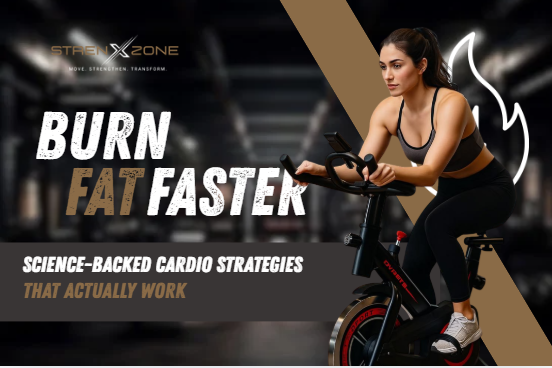
Not all cardio is created equal. If you’ve been jogging at the same pace for months with minimal fat loss, it’s time to rethink your approach. The right cardio strategy — matched to your goals and fitness level — can dramatically accelerate your results.
Train Smarter, Burn Faster
The best cardio plan isn’t about spending endless hours on a treadmill. It’s about using the right intensity, timing, and recovery strategy to maximize fat burning while protecting muscle.
Why Most People’s Cardio Doesn’t Work
The biggest mistake people make is doing the same steady cardio routine every single day. Your body adapts quickly, meaning the same workout burns fewer calories over time.
This is called the adaptation effect, and it’s the main reason fat-loss progress eventually stalls.
To continue burning fat efficiently, you need to vary:
- Workout intensity
- Cardio duration
- Training style
- Recovery timing
HIIT — High Intensity Interval Training
HIIT alternates between short bursts of near-maximum effort and recovery periods. It delivers maximum calorie burn in minimal time and elevates metabolism even after the workout ends.
Example: 30 seconds sprinting → 90 seconds walking → Repeat 8–10 rounds.
Thanks to EPOC (Excess Post-Exercise Oxygen Consumption), your body continues burning calories for hours after the session.
Sprint 30 sec → Walk 90 sec → Repeat 8 times.
Total Workout Time: 16 Minutes
Perform 2–3 times weekly for best results.
LISS — Low Intensity Steady State
LISS is slower, controlled cardio performed at around 50–65% of your max heart rate. Think brisk walking, cycling, incline treadmill walks, or swimming.
Unlike HIIT, LISS places very little stress on the nervous system, making it ideal for recovery days and sustainable long-term fat loss.
It also helps burn fat directly as fuel during the workout itself.
Fasted Cardio — Does It Work?
Fasted cardio means training before your first meal of the day. Since insulin and blood sugar levels are lower, your body may rely more heavily on stored fat for energy.
Fasted cardio can work, but total calorie balance matters far more than timing alone. Avoid doing intense HIIT workouts in a fasted state, as performance and muscle retention may suffer.
| Method | Duration | Best For | Frequency |
|---|---|---|---|
| HIIT | 20–25 min | Maximum calorie burn | 2–3x/week |
| LISS | 45–60 min | Fat loss & active recovery | 4–5x/week |
| Fasted Cardio | 30–45 min | Morning fat mobilization | 3–4x/week |
The Best Approach: Combine Both
The most effective fat-loss plan combines both HIIT and LISS throughout the week.
- Use HIIT for high calorie burn and conditioning.
- Add LISS walks on recovery days.
- Avoid excessive cardio that hurts recovery.
- Pair cardio with strength training for best results.
This combination keeps your metabolism elevated, prevents adaptation, and reduces excessive stress on joints and the nervous system.
The Truth About Rest Days
Fat loss doesn’t happen only during workouts — recovery matters just as much. Rest days allow muscles, hormones, and the nervous system to recover properly.
Remember: cardio burns calories, but your diet controls fat loss. Combine smart training with a sustainable calorie deficit for long-term results.
Not Longer.